If you rely on a mobility scooter or are considering renting or purchasing one, transportation is often the biggest concern. How do you get it into a car? What if you’re traveling across Connecticut for the day? Or flying? Visiting a casino, aquarium, or family event?
Transporting a mobility scooter is absolutely manageable with the right setup. Here’s a clear, step-by-step guide covering vehicle options, travel tips, airline rules, and how to avoid damaging your scooter.
Option 1: Transporting a Mobility Scooter by Car
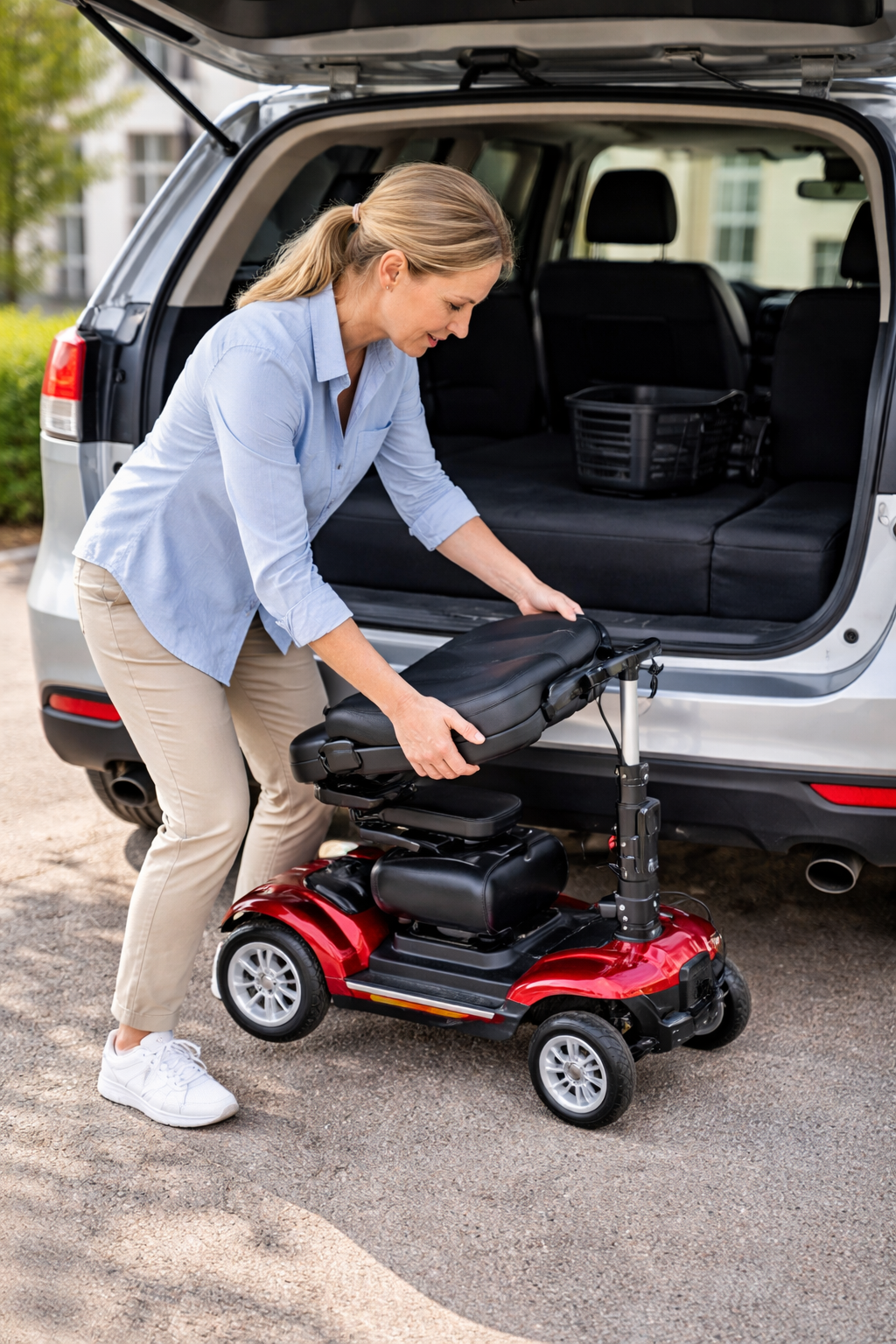
1. Trunk or Hatchback Storage (Portable Scooters)
Many travel-friendly mobility scooters are designed to break down into manageable pieces.
Best for:
Sedans, hatchbacks, SUVs
Short trips around CT (Mystic, Casinos, Farmers Markets, or State Parks)
Temporary or rental use
What to look for:
Lightweight frame (typically 40–60 lbs when disassembled)
Tool-free disassembly
Compact batteries
Tips:
Place heavier components closest to the trunk opening
Use a folded blanket or mat to protect upholstery
Secure parts so they don’t shift while driving
If lifting is difficult, this may not be the best long-term solution.
2. Hitch-Mounted Scooter Carriers
A popular option for people who don’t want to lift a scooter into a vehicle.
Best for:
SUVs, vans, trucks
Heavier scooters
Frequent travel
Things to know:
Requires a vehicle hitch
Some carriers are manual, others are powered
Weather exposure is a factor
Pro tip:
Always use a weather-resistant scooter cover when transporting on an exterior carrier—especially during Connecticut’s unpredictable weather.
3. Vehicle Lifts (Inside or Outside)
Vehicle lifts are ideal for individuals who travel often and want independence.
Types of lifts:
Internal lifts (vans, SUVs)
External platform lifts
Hoist-style lifts
Best for:
Heavier scooters
Long-term ownership
Users with limited lifting ability
These are an investment but offer the most convenience.
Traveling with a Mobility Scooter on the Road
Before You Go:
Fully charge the battery
Check tire pressure (if applicable)
Tighten any loose components
Remove personal accessories (cup holders, baskets)
During Transport:
Secure the scooter with straps or tie-downs
Avoid placing weight on the tiller or controls
Protect electronics from rain or road spray
After Arrival:
Inspect for loose bolts or shifted parts
Reconnect the battery properly before use
Can You Fly with a Mobility Scooter?
Yes—but battery type matters.
Airline Battery Rules (General Guidelines)
Lithium-ion batteries:
Must meet airline size limits
Often, it must be removed and carried onboard
Sealed lead-acid or gel batteries:
Typically allowed, but must be airline-approved
Always contact the airline before booking and confirm:
Battery specifications
Advance notice requirements
Check-in procedures
If flying feels overwhelming, renting a mobility scooter at your destination is often the simplest solution.
Avoiding Damage: Best Practices
Never lift a scooter by the tiller or armrests
Avoid leaving scooters exposed to rain or snow
Disconnect batteries during long transport
Don’t exceed the carrier’s weight rating
Use padding between scooter parts
Damage usually happens during loading and unloading—not during use.
Renting vs. Buying: Transportation Matters
If you:
Only need a scooter for day trips or events
Don’t want to invest in vehicle modifications
Prefer convenience
👉 Renting locally may be the smartest choice.
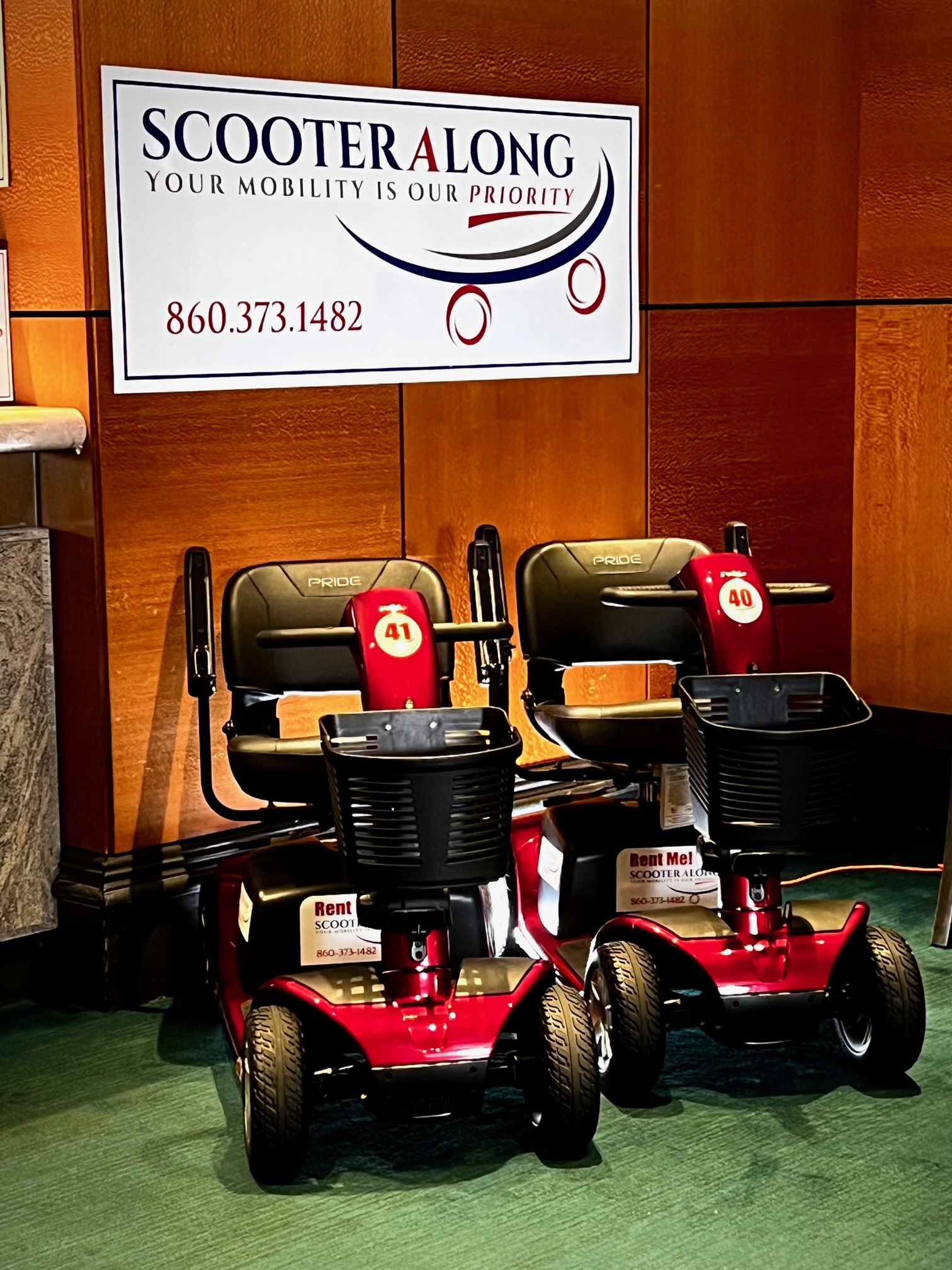
Scooter A Long helps customers throughout eastern Connecticut rent reliable, travel-friendly mobility scooters for:
Day trips
Special events
Recovery periods
Vacations
Final Thought
Transporting a mobility scooter doesn’t have to limit your freedom. With the right setup—or the right rental—you can travel confidently, stay independent, and enjoy everything Connecticut has to offer.
If you’re unsure which scooter is easiest to transport or whether renting makes more sense, Scooter A Long is happy to help you decide.